Pages

Showing posts with label anorexia. Show all posts

Thursday, March 4, 2021

Getting Help from Your Healthy Self

“When your healthy self is strong enough to deal with all that comes your way in life, your eating disorder self will no longer be useful or necessary."

-Carolyn Costin, 8 Keys to Recovery from an Eating Disorder

When I first read this, I was not in a good place. I was standing in the office of the university's therapy department looking through their small self-help library and wondering if any of the other students would notice that I was carrying a stack of books related to anorexia and body image. But as I got better, the idea of my "healthy self" started to make more sense. Somehow, following my meal plan and committing to being honest with myself, my care team, and my family enabled me to get in touch with my healthy self, and having "met" her, I am now able to call on her to help me with my relapse.

So . . . who is this mysterious "healthy self"? And what can we do to better hear her/him/them?

Personally, I find it helpful to imagine my healthy self as an older, wiser sister version of myself--someone who can see through the eating disorder's lies. And sometimes I even imagine her as my inner child--someone who I can take care of the way I take care of my students or siblings. When I'm tempted to listen to the eating disorder voice, I pause and ask myself what my healthy self would do. What would--to quote Marie Kondo--"spark joy"?


Even though listening to the healthy self may make you uncomfortable at first because disordered thought patterns, rules, and routines are so. so. so. ingrained in your subconscious mind, "sparking joy" can be a really useful way to make the healthy voice louder. What would you do in this moment if you were someone without an eating disorder? What would you do if you were, for say, a character on your favorite TV show or in your favorite book? What would bring your heart--not your rule-following mind--joy? And by "joy," I mean real
 joy--the joy that comes from being your true self and fulfilling your heart's need to feel and give love.

Becoming a teacher has made a huge difference in my recovery journey, and I really credit my teaching job for saving my life. Being with my students "spark[s] joy"--even on the hardest days--because it gives me something truly meaningful to focus on that exists outside of eating disorder thoughts.  

Other things that can be really helpful for finding joy outside of your eating disorder include . . . .

1) Reading. I'm currently working through All the Light We Cannot See by Anthony Doerr--a beautiful, powerful, tragic book that gets me out of my worry trails and into my heart space.

2) Watching a long-running television show. If you watch an episode every day/few days/week, that will make the show last longer, and the characters can become friends that remind you that there's more to life than eating and exercising. I really like Felicity, LOST, and Party of Five. 

3) Engaging in joyful movement. I had a really, really bad exercise addiction, so I fully recognize that movement may not be for everyone. And finding ways to cope with anxiety that don't involve movement is essential to fully recovering. But if movement is something you'd like to explore and that you feel would be safe (i.e. not triggering or physically hurtful) for you, I recommend checking out Yoga with Adriene or Mimi Kuo-Deemer on YouTube or blasting music and having a dance party. 

4) Just listening to music! I love Florence & the Machine, The White Stripes, Lykke Li, Bon Iver, Kate Bush, and The Cranberries. I'm also going to dedicate a whole post to songs that have helped me in recovery :).


5) Trying foods you used to love! I can't tell you how happy I felt having an almond butter and jelly sandwich in my lunchbox for the first time in five years when I started "recovering for real" at the end of 2019. And while I'm gluten-free due to gluten intolerance, I discovered the Kinnikinnick version and had my first "Oreos" in over seven years today! And it was really fun! 

6) Picking up old hobbies (or finding new ones). I used to write all the time. I started writing "books" when I was four, and throughout elementary and middle school, I was always thinking of stories and characters and how to bring them to life. I stopped writing in the deepest parts of my eating disorder because all I could think about were food and exercise, but now I'm writing again, and it feels really good to finally be doing heart-centered activities again. 

I'm sending everyone love, hugs, and the Force (I'm a bit of a Star Wars geek). What activities can you incorporate into your day that might help you get in touch with your "healthy self"? Could you call a friend? Plan a movie date with your cat? Whatever you do, remember that you are strong enough to get through your worries. You've got this. 

<3 Frances 


Images from Giphy.


Monday, March 1, 2021

Mental Shifts for Eating Disorder Recovery


I recently wrote about recovering from a relapse, and after a rough few days, I prayed for the strength to do what I need to do to heal so that I can show up as the most loving, present version of myself as a daughter, teacher, sister, and friend. Moving out of my head and my worries about myself and into a place of love for others always helps me when the anorexia voice is yelling at me. Anorexia wants to isolate you. I'm very much an introvert, but trust me--the isolation that anorexia offers you isn't pleasant quiet time with a good book. Rather, it's time alone with a bully.

When I woke up last Sunday (the first day of NEDA Week), I set the intention to do my best at making recovery-focused choices and getting back into the headspace I was in over the summer. And that was when I remembered the simple mindset shift I'd experienced last year--that recovery doesn't have to be hard.

Is it hard? Yes! Of course. But in my head, I try to set the intention for it not to be.

I still have to challenge myself, and I still feel scared, overwhelmed, and worried a lot. But I'm doing my best to act as though I'm not scared, overwhelmed, or worried. If I'm hungry but the anorexia voice is telling me to fast until lunch "because then lunch will be more rewarding," I choose joy over pain and have a snack. Which is awesome! Recovery means making choices that--even if they feel uncomfortable at first--will ultimately make you feel better. 

Drinking the night shake doesn't always come naturally to me, and sometimes, I'd rather not drink it. But I know that--in the end--it is the healthy choice. Not "healthy" in the convoluted, green drinks-only way. "Healthy" in the authentic, balanced, happy way that involves everything from eating a veggie stir-fry to dunking an Oreo in milk just to find out what all the hype is about. 


<3 Frances


Images from Giphy.
Friday, February 19, 2021

Living the Life You Want to Live

I want to start this by saying that my thoughts and prayers go out to anyone who is struggling right now. I have family and friends in Texas, and the situation there is just one example of the incredible suffering that is going on in the world at any given time. I'm an INFJ/P, and if I start thinking too much about all the pain that others are experiencing (humans, animals, plants. . . even fictional characters), I get a bit overwhelmed. I don't want to open this on a negative note (this post is meant to be inspiring, I promise!), but I think that--as much as acknowledging the pain around us can be triggering--it can also be a source of motivation for getting better.

A few weeks ago, Florence Welch wrote:

 "I am 7 years sober today. I send my love and support to anyone who is struggling. If you are feeling shaky around ED issues, drugs or alcohol, I completely understand. The desire to disassociate is so strong. But please don’t give up. We are going to need you on the other side."

As I'm working on moving through this most recent relapse, I keep thinking of Florence's words and the idea of "the other side." Anorexia is really, really limiting. As someone who's been battling it for seven years, I can tell you that it doesn't help anyone. Not you, not your friends, not your family . . . and certainly not the world. But don't feel guilty. Just as I didn't decide to fall into anorexia, orthorexia, or exercise addiction, you, too, didn't wake up one day and choose to stop eating. But recovery IS a choice. A difficult choice that leads to a long journey, but a choice nonetheless.

And here's the beauty of working towards "the other side"--you have the chance to base your life on your values. You can start living the life you want to live today. Isn't that wonderful? 


What are your values? What version of yourself do you want to be? The version that can enjoy dessert with her mum, read a book instead of going for a run, and volunteer at the SPCA without worrying about what she's going to eat for lunch, or the version that is too afraid to do anything but micromanage her eating and exercise habits? I've been the latter version of myself for far too long. In my relapse, I sort of lost sight of the potential to "get better for real," but I decided on Lunar New Year to commit to living the life I want to live. 

Of course, this (like so many things) is easier said than done. I recently downloaded the BrighterBite app for eating disorder recovery, and it is a wonderful, free tool (with an adorable aesthetic) that I highly recommend to anyone who feels bullied by their thoughts. I'm also starting therapy again. Having someone (or multiple people, ideally) outside of you holding you accountable can be fundamental for making progress. Getting this support system requires a lot of honesty, though. The anorexia voice may tell you that keeping your fears a secret will keep you "safe," but honesty is what's going to save you. I promise. This week, I admitted to my mum that--despite being 1000% times healthier than I was a year ago--I've been harboring fears around carbohydrates. The anorexia voice had me convinced that I couldn't eat the same bread as my mum and brother with my lunch because that would be "too many carbs at lunch." Flashback to my childhood, when my brother and I had the same lunches most days. I was completely healthy having hummus on a bagel or sunflower seed bread with almond butter, yet the anorexia voice would like to convince me that I "can't" eat those sorts of things anymore. UGH.

Well, after being honest about this both with myself and with my mum and "challenging" myself with the gluten-free bread my brother eats, I realized that the anorexia voice is (once again) lying to me. And even better than realizing that is realizing that I now have the freedom to, for instance, shop at a wider variety of stores because I'm no longer afraid of carbs at lunch. (Side note: We're GF because of Celiac in my family, and Canyon Bakehouse bread is really, really yummy--and it comes in recyclable packaging!)


If you're looking for permission to step outside of your comfort zone, open up about your worries, and start living a life on your terms (not anorexia's!), please take this post as a sign that all of these things are not only totally safe but also incredibly rewarding. When I start worrying about recovery being scary or bad, I remember that my life is so much better now than it was when I was in the deepest depths of anorexia. I'm on this journey with you, and as someone who is recovering, I want you to know that you CAN do it and that it is definitely WORTH it. 


<3 Frances 


Images from Giphy.

Thursday, February 11, 2021

On Navigating a Slight Eating Disorder Relapse

Lunar New Year is tomorrow. In the class where I teach, we made paper dragons to scare away bad luck, and at home, I'm sweeping the kitchen and hanging some red lanterns in honor of my own Chinese heritage and my hope that the coming year will call in the sturdiness, resilience, and courage of the Ox. My grandmother was a Rat, and given how incredibly challenging last year was, I attribute any of the good that came during it (such as the election, etc.) to her and the communion of spirit guides of which she is now a member. I was raised with a very eclectic spirituality that blends Taoist oneness with the statues of the Virgin Mary tucked away into Irish grottoes and nature worship, and throughout my recovery, I've been fighting to reconnect with the part of myself that believes in Chang'e and Mary Magdalene. (This is the same part that also loves making toast to enjoy while writing and reading--a part I've tried to crush beneath aggressive "should's" and "have to's".) But I'm not always as brave as I'd like to be, and after naively thinking I was fully recovered this summer, I incidentally slipped back into anorexic thinking patterns a few months ago after some stressful triggers I didn't expect would affect me. Like seeing someone from high school at the store. Backsliding wasn't intentional. It just happened, and while I look and feel 1000% better than I did two years ago, my brain and body still have some healing to do. 

Okay. Maybe a lot of healing. Even if you're far along in recovery, an eating disorder/anxiety disorder can make you go from feeling on top of the world one moment to feeling angry at yourself and very sad the next. I have tremendous gratitude for all the love in my life, but in the moments that the bully voice is yelling at me, I can't help but to miss childhood and the way it felt to be entirely free of any compulsions to control what I eat or how I move.  Something that's helped me is remembering who I used to look up to--Amélie Poulain, Violet Baudelaire, and Padmé Amidala. These are characters who lead out of love rather than out of fear.  


Somewhere along the way, though, my connection to my heart broke under the weight of anxiety and pressures to abandon my spirituality in favor of competitive Western individualism.

In other words, I stopped believing in faeries. 

And now that I have the perspective (thank you, nutrition!) to at least admit I'm struggling, I have the hope of getting better--for real this time. This summer let me know that it's possible, even if I'm still a bit of an addict. Thinking of an eating disorder as an addiction can be helpful because, like other addictions, eating disorders lead to compulsive behaviors and alter the reward centers in our brains. Exercise can become a compulsion that initially leaves us feeling "high," but over time, that high goes away, and all that's left is someone so desperate to feel "numb" or "safe" that they're willing to sacrifice everything just for a few more minutes on the treadmill. Same with unhealthy fasting. It's not an answer to anything--just a temporary high that comes with long-term consequences.

I'm writing this to let you know that relapses are okay and that you still have permission to heal. If you've relapsed--even if just slightly--you still deserve to do the work to get better. You have permission to have the life you want to have. You can learn to believe in faeries again, and as we all know from Peter Pan, that's all it takes to bring them back to life.


<3 Frances


Images are not mine. 


Tuesday, April 7, 2020

Hugs and Resources to Support Eating Disorder Recovery

I haven't written anything here in a while now.

A lot has changed.

The world is a very scary place sometimes, and right now, we're experiencing something that I couldn't have predicted.

How are you? How are your loved ones?

I'm very grateful that I get to be home with my family. The school I teach at is transitioning to an online format, which has been challenging, but my heart is with the first responders and the heroes that are making it possible for the world to maintain some level of normalcy.  And my prayers go out to those who are suffering right now.  The other day on the news, I heard a rabbi talking about the difference between "inconveniences" and "problems." Inconveniences are the little things that we tend to feel anxious about or frustrated with. But they aren't problems, and the more we learn to handle them, the better able we will be to handle real problems when they arise.

Gratitude.

It all comes back to gratitude. And service.

For anyone dealing with an eating disorder, know that focusing on gratitude and on service will make the whole recovery process so much easier. Trust me. I've been battling Bellatrix (the ED voice) for nearly seven years, but I've made a lot of progress in the past three months because I've finally stepped out of my head and into my life. I've started trying to give back in what little ways that I can while also constantly reminding myself of how lucky I am to have the opportunity to heal.

Eating disorders like to trap us in the worry trails in our minds, and--at least for me--focusing too much on myself and my thoughts made these trails even harder to escape. The more I got into my head and my feelings of discomfort, anxiety, etc., the stronger Bellatrix became.

I'm not saying that it's bad to talk about our feelings. I actually met with a therapist last semester, and having someone to talk to is incredibly important.

But remembering that there is more to life than the stories we tell ourselves is important, too.

Lao Tzu taught that "what is small is easy to scatter." The smaller our lives become, the more easily the winds of anxiety can sweep them away. We need to root ourselves in things that are lasting--like faith, love, and gratitude.

That being said, I have some resources to share that I hope will help anyone dealing with eating disorder thoughts, body image challenges, or even just general feelings of anxiety.


Yoga With Adriene
If yoga is something that you and your treatment/support team agree would be supportive to you, I can't recommend Yoga With Adriene enough. I did the Revolution series with my mum last month, and Adriene's flexible attitude and fun personality serve as helpful reminders that movement should never be a punishment. In one of her videos, Adriene even says that she doesn't "subscribe" to the "no pain, no gain" philosophy. She's a good role model for loving yourself and everyone else.


The Real Life RD
Another good role model is Robyn Nohling, FNP, RD. In her blog, she debunks nutrition myths, shares fun recipes (marbled banana bread, anyone?), promotes intuitive eating/HAES, and provides a plethora of resources surrounding female health and wellness. I've been reading Robyn's blog for a long time, but I actually got to meet her in person this year. She's awesome and brilliant, and her perspective on health is so freaking refreshing after spending so long in the diet culture rabbit hole!


Mimi Kuo-Deemer
I found Mimi through the qigong videos she posts on YouTube, and her calming demeanor and graceful presence inspired me to read Qigong and the Tai Chi Axis: Nourishing Practices for Body, Mind, and Spirit, her first book. I LOVE THIS BOOK. Mimi is a yoga teacher who incorporates qigong into her practices. Qigong is a Chinese healing system based on fluid movements inspired by the five elements (Earth, Wood, Metal, Water, and Fire), and being of Chinese heritage myself, I love incorporating qigong's principles of balance and fluidity into yoga (and into my daily life).  Mimi is also currently offering donation-based yoga and qigong classes online via Zoom.


<3 <3 <3 Frances

Friday, October 4, 2019

Limiting Beliefs and Our Bodies


Happy Friday! I'm sending happy thoughts for everyone from the world of midterms. I'm grateful to be feeling much better today than I was earlier this week, but now that the fatigue of the flu is gone, my anxiety is beginning to ramp up a bit. Anxiety likes to take whatever energy we have and channel it into running through worry trails. My worry trails include thoughts like:

"Move more!"
"Wait--what's in that? Is that too much?!"
"Plan. Plan. Plan."
"You need to earn your food!"
"How many calories is that? Is it too many?"
"Should you have x if you're planning on having y later? Both are fruits. Fruits have sugar!"

UGH.

I wish that I could say that I were far enough on my own recovery journey to have released these thoughts, but the truth is that I'm not. Yoga has been immensely helpful for me in terms of learning to work with my body as opposed to against it, and I recently began using EFT tapping to deal with moments of acute anxiety. (I'll write more about EFT later--it's really cool and wonderful!)

But I still have some limiting beliefs surrounding food and movement. A major issue lately has been my belief that I need to "earn" my food through movement (i.e. lots of walking, standing, etc.). The idea that you need to burn x calories in order to be "allowed" to eat something is pretty ridiculous, but it's one of the diet culture myths that has been the hardest for me to separate myself from.

empoweredeatingrd.com

I was raised in a home where I was fortunate enough to have access to a variety of nourishing foods that came from sustainable sources. I enjoyed Nanny's homemade almond butter bars and scrambled eggs and feta without hesitation, and making apple crisp or gluten-free brownies (family with Celiac) was a highlight of every Friday night. Helping mum make Thanksgiving dinner never freaked me out, and the few weekends we splurged by getting Whole Foods hot bar takeout were so exciting because they had yummy chicken and salad and OMG gluten-free cookies!

I was a healthy child. I knew I got a rash when I ate dairy or gluten and that certain chemicals made me feel bad, but I didn't have to analyze these reactions or "label" my diet as "plant-based" or anything else. I ate things that made my body feel cared for without having to think about it too much, I played outside, I sometimes did yoga with my mum, and I read a lot. 

Something I didn't read? Calories. Sure, I'd look sometimes to see if an ingredient list had a food sensitivity in it, and I avoided things that came from factory farms, but I never looked at calories or serving sizes and used those numbers as guides for how to eat something. 

Obsessing over whether or not I'd eaten more than one ounce of Terra chips would've ruined all of my childhood Terra chip-eating experiences. Back then, I looked at a bag of Terra chips with a) gratitude and b) the hope that my brother wouldn't take all of the sweet potato ones.

Calories didn't really start to "matter" to me (read: dictate my life) until I was in my freshman year of high school. I was stressed, lonely, and seeking a way to cope with anxiety. Sadly, the coping mechanism I ended up choosing was the online calorie tracking app we were told to use during health class.

I'm not criticizing health class, but I think some of diet culture's convoluted messaging definitely seeps into a lot of what people are taught about wellness. We aren't taught about the antibiotics used in factory farming or about mindfulness or about the chemicals in Febreeze. And all of the good things we learn about--vegetables, fruits, fun recipes--is largely overshadowed by the calorie.

Even on my healthy diet--the one that my body had been trusting since childhood--my calorie intake was "too high" than my expenditure. I'm very petite, so the BMR that my calorie tracker calculated for me was pretty low, and I remember doing my health homework and discovering the horrifying fact that I was consuming way more calories than I "needed." 

Oh, no! 

The next part of the assignment--multiplying my excess intake by 365 days and then converting that to pounds--freaked me out even more. I was left feeling like a total failure, and from that point forward, I entered the caloric value of everything I ate into my tracker.  I also upped my movement to "compensate" for my intake--just to be safe.

I did everything that I felt was necessary to get an "A." And I ended up getting Anorexia.

#fail

My story (which of course involves more factors than just that health assignment) aside, what I'm trying to get at here is that our brains are very susceptible to the language we expose them to. If we keep telling our brains something, they're going to start to believe us, and then we're going to end up being controlled by whatever it is we told ourselves. Our thoughts are very powerful. If we keep ingesting diet culture-inspired thoughts, then those are the thoughts we're going to have.

I'm proof of this. Diet messaging very easily "sticks" with me. I read somewhere a few years ago that meals MUST be spaced three hours apart. This, apparently, is vital for survival, and I incorporated this rule into my innermost being. As a result, I still struggle with what to do when I'm experiencing low blood sugar. If it's only been two hours since breakfast, I question whether or not I can eat a snack--even if I'm lightheaded or really hungry.

As a child, I definitely would've had a snack. And then I would've moved on. One of Nanny's nut butter bars and I'd be set. But now--just because I read a silly post on a health blog--I'm caught in a limbo of low blood sugar = worrying = waiting (and then still not eating enough) = anxiety.


PLEASE, don't let yourself be controlled by your limiting beliefs! Limiting beliefs lead to limited lives. A best friend of mine once asked me to go to yoga class with her. I panicked. I couldn't go to yoga . . . I had to run so that I could eat dinner. 

Don't make that same mistake. Skip the run. Do the yoga. Eat ice cream at your brother's birthday. Dance. Watch a movie. Paint a picture. LIVE.

Don't live limited.

<3 <3 <3 


Tuesday, October 1, 2019

Your Body Needs Rest

Happy October! It's midterms week at my uni, and I'm wandering around my apartment in a bathrobe and several sweaters. Some variation of a stomach virus/flu that I wasn't even aware was going around right now has hit me rather hard.

Being sick makes me very emotional.

I really, really don't like missing class (especially during tests), and I'm immensely grateful for how sympathetic and understanding my professors have been. I'm studying and working on homework today in between waves of nausea, and I'm hoping that my ability to function today isn't just the result of it being morning (fevers tend to spike at night, sigh).

What's funny is that--just two days ago--I sat with Shakti Gawain's Creative Visualization and Gail Swanson's The Heart of Love (a book of divine feminine/Mary Magdalene wisdom) and asked the spirits/universe for guidance. I confessed that I'm still in a relationship with my eating disorder, and I attempted to visualize myself healing and finally going through with the break up that I know will ultimately set me free after six years.

As soon as I woke up the next morning, I knew something had shifted, and it didn't feel good. I went to school hoping that things would resolve themselves, but I ended up crying on the floor that evening with a 101F fever and so much nausea I could hardly think about food (never mind diet or recipe books). One Exorcist-like event (which I don't wish to provide too many details on) later, I was unconscious on the couch, and only now am I able to look at my computer screen to do homework.


While working at my desk, I saw the Creative Visualization book and began wondering if there's perhaps some kind of "cosmic significance" to being sick right now. I know that not everything has to be divinely ordained, but the spiritual side of me can't help but to recognize the specialness in the fact that I prayed and visualized healing on Sunday night (right after a New Moon) and then woke up with the worst sickness I've had in years.


New Moons are times for "new beginnings." They give us the opportunity to release whatever has been holding us back, and perhaps being sick right now is a wake-up call for me. The universe is punishing me for pushing myself all the time and refusing to listen to my body's needs. I've spent too much time rejecting my body's signals. Anyone who has ever had an eating disorder understands what I'm talking about.

Hungry? Wait. Tired? Walk more, go harder, move faster. Sick? You can't get sick! Rest? How lazy!

When we let Gollum/Bellatrix/the ED voice control us, we prioritize control over balance and health. I, for one, have allowed control to stamp out the yin/Kapha/calm from my life, and now I'm paying the price. I'm being forced to slow down. I'm too tired to work out or clean, and I'm too nauseated to think about food as anything other than sustenance (i.e. no more weird food obsession).

The stomach ache, the nausea, the muscle aches, the chills, the fever . . . these symptoms are all really unpleasant, but instead of viewing them as "unfair" or "inconvenient," I'm going to recognize them as signs from my body that I need to tune back into her needs. I need to stop pushing her so much and allow her to rest so that she can heal.

If you're reading this, I hope you realize just how important it is to practice awareness with your body. Developing a nurturing relationship with your body. Don't punish it, starve it, or ignore it. It's made of stardust and does not deserve to be abused and tossed about like some sort of object, and if you push it too hard, it will break down.

We aren't invincible. The ED voice likes to tell us that we'll be invincible if we allow restriction, fear, etc., to run our lives, but the ED voice is a notorious liar.  The ED voice damages everything--organs, relationships, souls. Tell the ED voice you're not going to listen to it anymore.

"Let us imagine that life is a river. Most people are clinging to the bank, afraid to let go and risk being carried along by the current of the river. At a certain point, each of us must be willing to simply let go, and trust the river to carry us along safely. At this point, we learn to 'go with the flow'--and it feels wonderful."
-Shakti Gawain

<3


Images used in this post are not mine :). They were found on Giphy and Pinterest

Monday, July 29, 2019

Mirrors and Media

It's been quite a bit of time since I've visited this space. New jobs, a new university, and a relative in the hospital have kept me away from any non-work-related writing, but I'm excited to be back today to share a few thoughts that have been helpful in battling the demons of anxiety and anorexia.

Image found on Her Campus


A few weeks ago, I experienced a (rather frightening) flash of reality when I watched a news clip about the dangerous side of the "K-Beauty" industry. Plastic surgery is in huge demand in South Korea, with Seoul considered to be the plastic surgery capital of the world, and among the most in-demand surgeries are double eyelid surgery and nose jobs.  Now, I'm not criticizing anyone who has had any of these (or any other) cosmetic procedures, but it does break my heart a bit to think that roughly 1/3 of young South Korean women have felt the need to alter their faces in order to be beautiful. (And I'm terrified by the fact that the walls of the Seoul metro station are covered in plastic surgery advertisements.)

Being part Chinese, I'm very aware of how difficult it can be to "live up to" some of the Asian beauty standards, and the shock and sadness that I experienced when learning about the popularity (and risks) of plastic surgery for so many people throughout South Korea made me think more seriously about every country's beauty standards and how unrealistic they are (ex. U.S. ideal of supermodel/fitness model with million dollar legs wearing skinny jeans and a white t-shirt).

We're surrounded by media influences. Phones. Televisions. Websites. Movies. Magazines. Whenever I take an objective look at life and realize how much time we spend exposed to advertising and (very edited) images, I question the sanity of the world. That said, though, I question my own sanity even more because I'm often very sucked into the "look this way, feel good" messaging we're inundated with. I know that what's really important is inside.

The soul.

The spirit.

The dreams that wake you up and make you feel inspired to do something more with your life.

But none of these things are glamorized the way that a "perfect" body is. Why can't average or easy be okay? Why do we need to recreate ourselves into something "better"?

Here's the answer: we don't need to. In fact, all we ever "need" to do is be kind. Kindness towards ourselves and others is the answer, and it always has been. Kindness is respecting your body and the bodies of others. Kindness is nourishing yourself properly. Kindness is getting sleep when you need it but also letting yourself stay up just a little too late to celebrate a friend's birthday. Kindness is getting vegetables but also baking muffins with your mum. Kindness is realizing that your world doesn't have to revolve around macros or calories in order for you to feel good.

"I believe we all have the opportunity to stand up as women in our ordinary everyday lives. I believe that we all have the power to replace hate with justice, open-heartedness and kindness. This doesn't have to be a seismic change that we all have to learn. I believe we, as humans, (gender aside for a moment) have the opportunity to combat hate because of the way we behave towards one another. Not just during seminal moments, but during our everyday, ordinary ones too.I believe we can start with kindness."-Emilia Clarke

<3 <3 <3


Wednesday, May 8, 2019

Stepping Out of the Comfort Zone

I like familiarity. It's comfortable and easy, and when every day is the same, there is little room for uncertainty.

But avoiding uncertainty is completely unsustainable. The only thing that's guaranteed in life is change, and if we aren't ready and willing to adapt to change, then we're setting ourselves up for a lot of stress.
Image result for fear of change meme

One of the biggest challenges of eating disorder recovery is learning to embrace uncertainty. An eating disorder's survival relies largely on things being "controlled" and "predictable." We need to be able to plan our meals (or lack of meals) and regiment our exercise so that everything is totally "balanced" and we don't have to worry about our bodies just being the way they're meant to be. I mean, how on Earth can we trust our bodies to work normally when all the diet and fitness media tells us that our natural selves just aren't good enough?

For me, embracing change means adding extra food in (while also reducing the amount of time I spend running around for no reason) and then just letting my body work itself out. Embracing change means not constantly calculating calories in and calories out all the time. Embracing change means stepping WAY outside of my comfort zone and moving forward with my life instead of just staying where I am right now.

It's very tempting to stagnate, but it's not healthy. If any of us want to have fulfilling lives, we need to kick our eating disorders out and take back what is rightfully ours. We deserve the energy and motivation that will help us be positive forces in the world. It's impossible to be fully present when we expend at least 50% of our mental energy calculating calories and worrying about our workout routines.  Seriously, though. I've made some very sad choices in the name of my eating disorder, and it breaks my heart when I hear stories of people ruining family events and other fun experiences because of their worries about food and exercise.

The stair climber will always be there. The person sitting next to you right now won't.


I fully understand how difficult recovery is. I'm in it right now, and every day presents new obstacles. I'm constantly having to ask myself if I'm making fear-based or love-based choices, and as the semester draws to a close, I'm anticipating a summer that will bring some major life changes. But every day I tell myself that change and uncertainty aren't necessarily bad. Maybe they're actually good. If change means no longer worrying about calories and macros, feeling more fully alive, and being a force of good in the world, then bring it on.  

<3 <3 <3 

Sunday, April 14, 2019

Applying The Power of Now to Eating Disorder Recovery (Part Two)

Happy Sunday! Things have been slightly chaotic lately with lots of work and school deadlines and events, but the pretty April flowers have a way of making everything seem very storybook-like despite awful springtime allergies. I'm working on an essay right now about the relationship between environmental and human health (both mental and physical), and last week I hosted a fundraiser at school for an organization supporting artists in Guatemala and Nicaragua. (If you're interested in supporting these artists, too, visit wwww.pulseraproject.org.)

I'm excited to be sharing Part Two of Applying The Power of Now to Eating Disorder Recovery. Tolle's book can really be applied to anything in life, but the way it connects to eating disorders has been very powerful for me, and the section I'm reading now--all about the "inner body"--has profound implications for the disconnect that occurs in the throes of an eating disorder. In anorexia, my mind, body, and soul all separated from one another. My soul took the backseat to my mind--which was "infected" with insidious thoughts--and my body became an object that I had to control and obsess over.

UGH.

Yoga has been very helpful for me in recovery because it is focused on connecting the mind, body, and soul back together. "Yoga" literally means "to yoke"--pull together--and by linking breath, movement, and intention, I'm slowly figuring out how to stitch myself back into a whole spirit-person again. Eastern philosophy emphasizes the "bodymind," and if you're trying to recover, please remember that, though you aren't your physical body, there is a profound and beautiful connecting energy force coursing through you that links your physical self with your spiritual (true) self. Also remember that when Eckhart Tolle refers to "connecting to the body," he usually means the "inner body." We'll get to that now :).

The "inner body" is not part of the external world. Rather, it is the invisible energy running through you that makes you who you are and enables you to become "rooted within" (Tolle 98). Think of yourself as a tree. The inner body is the complex root systems coming up from the earth and spreading up and into your trunk.


Image result for you are a skeleton fear nothing


Here are some excerpts from The Power of Now that may help make the concept of the inner body more understandable:

"Direct your attention into the body. Feel it from within. Is it alive?  . . . Can you feel the subtle energy field that pervades the entire body and gives vibrant life to every organ and every cell?" (p. 93)
"The art of inner-body awareness will develop into a completely new way of living, a state of permanent connectedness with Being, and will add a depth to your life that you have never known before." (p. 98)

Your inner body is "formless, limitless, and unfathomable" (Tolle 93), and you can connect with it at any moment to pull yourself out of your head. It's difficult to connect to the inner body because we've been so conditioned to be focused on the external and on the mind, but try to take a few moments every day to consciously tap into the energy field within yourself. Even if you can only do it for a second, it will help ground you, and over time, connecting within will become less of a challenge. Meditation and yoga or any other sort of mindful activity/exercise can strengthen your bond with your inner body, and I highly recommend picking up a hobby that encourages inner-body awareness.

<3 <3 <3


Thursday, April 4, 2019

Confessions of a Cortisol Junkie

I come from a long line of cortisol junkies. We treat coffee and green tea like they're food, prefer intense cardio sessions to relaxing movements, stay up late working, and even wash our faces with anxious rapidity.

Where do we get all of this energy if we're eating sparingly and sleeping shallowly? Is it magic? A gift?

No. It's just cortisol.

Found on Pinterest.com

Cortisol is a hormone released by the adrenal cortex in times of stress. It's one of the key hormones of the "fight or flight" response, and, while it's very much necessary in the body, Mama Nature never intended for it to be our go-to fuel source. (As all of us eating disorder warriors need to recognize, the best go-to fuel source is food. Which means that survival depends on eating. Sigh.)

My tendency to run on cortisol (both literally and figuratively) has really contributed to my tendency to engage in restrictive eating behaviors. Feeling empty gives me energy, but what I'm learning is that the human body can only take so much depletion before it gives up. Chronic jaw issues, dry skin, and anxiety are some of the symptoms that are triggering me to realize that maybe the cortisol junkie lifestyle isn't very sustainable. And many of the women in my family who are also cortisol junkies have suffered a plethora of health conditions related to their adrenal systems.

Cortisol breaks down our bones and causes inflammation in our bodies, and when we're malnourished, we tend to have even more anxious, self-deprecating thoughts than we normally would.  Ever notice how not eating makes it more difficult to eat? Yeah. It's a vicious cycle, and the only way to break out of it is to make the conscious choice to not give into your desire for the cortisol-induced "high."  Think of yourself as a WARRIOR. Be STRONGER than whatever mean voice exists inside your mind.

You are not your thoughts, and whenever you're tempted to engage in an eating disorder behavior, remember that you are WONDER WOMAN, and you're flawless.

From giphy.com 


<3 <3 <3 

Saturday, March 23, 2019

Applying The Power of Now to Eating Disorder Recovery (Part One)

Happy Saturday, loves! I hope that everyone is having a happy start to Spring. We don't really have any big festivals here where I live to honor the arrival of this season, but I like imagining the celebrations taking place around the world because it makes life feel more colorful. And Spring is a really good excuse for weaving flowers into my hair, which is something that I have never done but have always secretly wanted to do. Because being a faerie would be fun, right?

I'm continuing to read A New Earth and The Power of Now, and I have to say that these books have had a profound impact on how I perceive the whole "eating disorder recovery" process. Because of this, I'm going to be posting a little series of reflections on the principles of The Power of Now and how they relate to the healing journey.
(I'm going to pause really quickly here so that the words "healing journey" can sit with you for a moment. Rather than thinking of eating disorder recovery as loss of identity/major change/etc., think of it as what it is: recovery from an illness. You're healing your body. You're not "losing your fitness" or anything, okay? Making this shift from victim to warrior is incredibly empowering. I mean, right now we have the opportunity to change our lives for the better! An eating disorder is not a choice, but recovery is. It's healing. We're healing. Yay!)

I rediscovered The Power of Now while staring in desperation at the titles in my mum's medicine pantry. Many of the books there were collected by her and by my grandmum over a period of decades. They're coffee-stained and have broken spines and smell like cinnamon, and they remind me of a childhood spent rescuing earthworms from flooded streets and listening to my mum and grandmum read aloud from the works of Beatrix Potter, Marianne Williamson, and C.S. Lewis.

When I saw the faded binding of The Power of Now, I remembered the audio book version that my grandmum used to play during long car trips, and upon opening the book's cover, I discovered the words "best heart" scrawled in my five year-old handwriting. My grandmum used to always tell me to love with my "best heart," and seeing those words again was like a wake-up call. My "best heart" would in no way approve of an eating disorder. And neither would my grandmum.

Image result for the power of now

Between school assignments and work, I've only gotten about a quarter of the way through The Power of Now, but the sections that I've read are already full of underlining and annotations. The concept of the "pain-body" has been particularly meaningful for me because Tolle's description of the pain-body is so applicable to eating disorders. The pain-body seeks to perpetuate itself by feeding on the sadness, anxiety, and fear that it creates.
"The pain-body wants to survive, just like every other entity in existence, and it can only survive if it gets you to unconsciously identify with it. It can then rise up, take you over, 'become you,' and live through you."
WOW. Reading this, all my disordered eating patterns started to make sense. When I start digging a hole for myself--relapsing, getting absorbed in fear, etc.--it's really hard to pull myself out of that hole. The pain-body "feed[s] on any experience that resonates with its own kind of energy," so the more anxious I become, the more power the pain-body gets. And then, because the pain-body convinces me that it's who I am, I just dig my hole deeper, not realizing that my eating disorder is trying to perpetuate itself. This all sounds pretty abstract and metaphysical, I know, but it's been incredibly eye-opening for me. I've finally started to take a step back and realize that my eating disorder is an illness. It's pain seeking pain, and I have the power to put an end to it.
"The pain-body . . . is actually afraid of the light of your consciousness." 
Next time, I'm going to write a bit about consciousness and awareness vs. unconsciousness and thinking. I hope that these posts will resonate with some of you, too, and I'm sending #kittyzen wishes.

<3 <3 <3

Tuesday, March 12, 2019

Identity and Playing Small

After work today, I was feeding my cats and listening to Oprah and Eckhart Tolle Chapter 7 of A New Earth when I heard their conversation shift to eating disorders. A caller phoned in asking for advice on how to release her attachment to her "eating disorder identity," and her words sounded just like some of the ones that so often go through my mind. Once we've consciously acknowledged that we need to recover, how do we take the leap and let go of the false "safety" that an eating disorder provides?

In the podcast, Oprah and Eckhart explained that the answer can be found in becoming more present and embodied. That makes a lot of sense given that the whole premise of A New Earth is presence = awakening, but they took this idea further by saying that, when we're caught in the eating disorder identity, we're refusing to see ourselves as "bigger" than our eating disorder selves.  Oprah's advice was particularly powerful. She said that the eating disorder is "as big as you know yourself to be right now. And when you know yourself to be something more, you will choose to be the something more and not this 'little me' that has an eating disorder."


WOW. Eating disorders may feel safe and easy, but they aren't who we are, and even if we feel like they're "working" for us sometimes, they aren't. All eating disorders can do is hurt us, our relationships, and our lives, and we need to stop "playing small" so that we can recognize the awesomeness and potential that exist beyond the eating disorder world.

Image result for eating disorder recovery quotes


<3 <3 <3

Tuesday, January 1, 2019

New Year's Recovery Goals

Happy New Year, loves! This can be a wonderful time for refreshing and reflecting, but it can also be a time that is fraught with self-judgement and self-hatred. I'm trying to make the season of twinkly lights and hymns last as long as possible, but as Christmas is now over, most of the media has shifted its attention to diets. I wrote quite a bit about the whole "new year, new me" mindset in my last post, and I'm definitely noticing just how much pressure there is to "make up for the holidays."

SIGH.

What are we really "making up" for? It's awesome to do things that make your body feel better--taking a walk with your family, eating something nourishing and warming, drinking a cup of tea--but please don't jump on the restriction bandwagon! It's crazy tempting, I know, but it's not worth it. I'm reading BrainwashED by Elisa Oras, and I've learned so much about how chronic dieting hurts our bodies. Think about it: how can our bodies trust us if we're constantly depriving them of nourishment and forcing them into insane exercise routines?
Related image
How our bodies feel when we're chronically dieting (Giphy)

Instead of setting yourself up for another round of what Elisa calls "Diet Merry-Go-Hell," how about taking 2019 as an opportunity to set yourself up for long-term health awesomeness? I'm proposing a challenge for all of us eating disorder warriors to actually get better. Woah, there, wait a second . . . what if that means changing physically? Change = scary!!

But isn't change the whole point of recovery? If I were healthy right now as I am, then why would I even need to recover?  

Snacks, increasing intake, getting rid of "sick" clothes, decreasing physical activity (see below) . . . these all freak Bellatrix* out, but if I want her to let me go, I need to make her as uncomfortable as possible. Even if that means she'll make me a bit uncomfortable in the process.
Related image
When you're not supposed to exercise in recovery . . . . (Giphy)
My "new year, new me" plans include doing most of the things that the fitness magazines tell you not to do, but, just like everyone else, I'm doing these things in order to get healthy. We're all different. If you're getting over anorexia, for instance, eating dessert every night may be just what you need to do in order to be the healthiest version of yourself. PLEASE, don't judge yourself, restrict yourself, or hurt yourself. Be your body's best friend. All your body wants to do is to keep you alive, so let it.

Talk to yourself like you love yourself, eat like you love yourself, and move (or rest) like you love yourself. Following breakfast, a morning snack, and lunch, I'm feeling kind of uncomfortable, but I'm sitting (not standing, running, or pacing!) with a heating pad and doing my homework. The fitness magazine says I should skip a morning snack, go on a run, and fast as long as I can, but I'm not going to do that because I've tried already tried all those things. I've done exactly what the magazines want me to do, and guess what? My skin dried out, I became irrationally afraid of eating, and I spent a good portion of high school stressing about how to avoid eating dessert at my birthday. I'm sick from Bellatrix, and I'm sick of Bellatrix. 2019 is not her year.

<3 <3 <3 

*Bellatrix is the name I use for the eating disorder voice in my head. Note that I adore Helena Bonham Carter and Harry Potter. I only call the eating disorder voice "Bellatrix" because I love movies and literature and Bellatrix is a really scary villain.


Sunday, December 23, 2018

Holiday Thoughts from Eating Disorder Recovery

Now that final exams are over and it's almost the last day of Advent, I feel like the whole season is going by very quickly, and it's increasingly difficult to stay grounded amidst the chaos of last-minute shopping and mailing and the close of the semester as both a student and a teacher. The little kids I work with were very excited to be going home for winter break, and I'm grateful to be home. Most of my energies are now devoted to approaching scholarship deadlines, cleaning, sending packages, cat-sitting, and more cleaning, but, as someone still "in recovery," my thoughts have of course wandered to places eating disorder-related.  Needless to say, some of those places have been more enlightened than others.

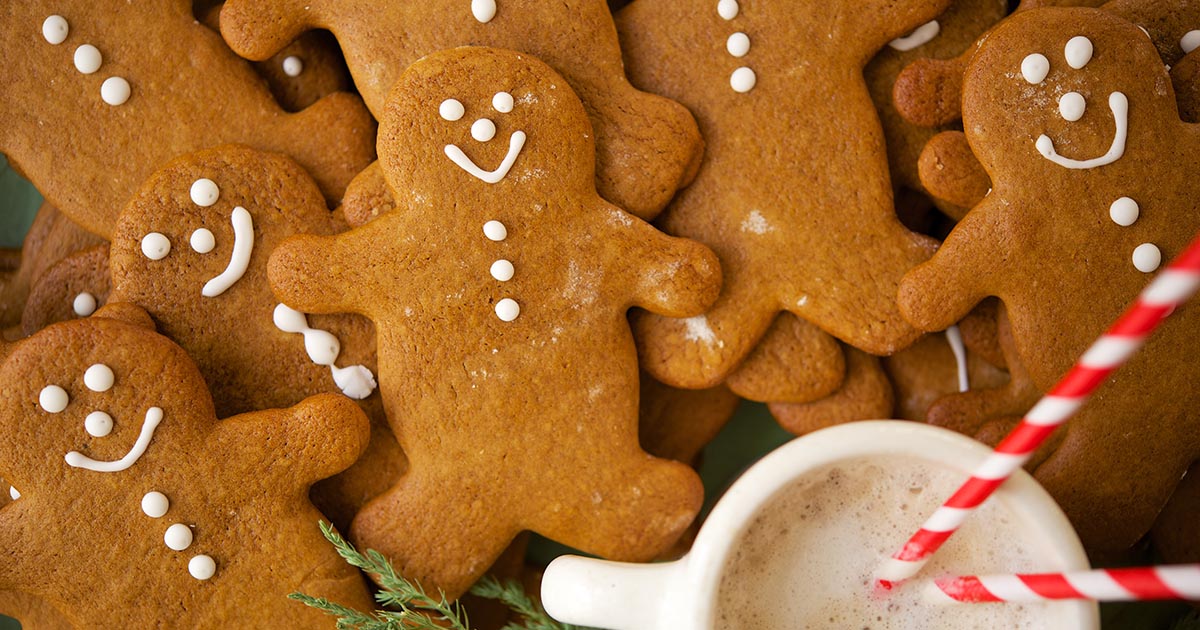
Seriously, though . . .  these gingerbread men are more enlightened than I am sometimes.

Image result for gingerbread cookies
From delish.com

It's the time of year that, between Christmas songs, radios play advertisements for gym memberships to help you "get back on track" after the holidays. I'm by no means being critical or negative about these ads. Gym memberships can be wonderful opportunities for people to take a break, relax, and do something fun and active. But the way we talk about "fitness" is seriously flawed. By using phrases like "earn it to burn it," we've created a paradigm that food and exercise are related. In order to eat, you need to work out.

If I told that to my child self, she'd look at me like I were crazy. For little kids, "working out" isn't really a thing. My students move around intuitively, eat intuitively, sleep well, and lead healthy lifestyles just by default, and they all look different based on genetics. They don't have any of the addictive, unhealthy habits that hurt people physically and mentally, and they don't exist in extremes. None of them are equating what they eat to how they move, yet none of them are spending all day watching YouTube videos, either. "Balanced' doesn't mean "following all the magic health guidelines" and being "perfect." It means just being and living in a way that is light and flexible and free and connected to nature, your spirit, and other people.

In other words, "balanced" does not mean jumping on the self-hate train as soon as the holidays are over.

I know that this is much easier said than done. It's been a long, long time since I've eaten dessert and felt totally, 100% "free" about it afterwards. Usually, a lot of breath-holding and self-hate is involved! As someone who loves yoga, meditation, and spirituality, I often feel like a hypocrite. I give so much lip service to "compassion" and "loving-kindness" and "flexibility," but then when I'm supposed to be compassionate, kind, and flexible with myself, I'm the opposite.

Image result for she's a life ruiner meme
Janis is probably talking about anorexia! (Image not mine.)

What's been helping me in times of self-bullying (which, for anyone affected by New Year's food- and body-shaming, may be more frequent during the holiday season) is taking a deep breath and going to that more spiritual place in my head that realizes my body is a gift, not a burden or an object. Again, this is easier said than done, but when you're judging yourself, try to take a step away from yourself. There's this lovely quote floating around the Internet about how everyone is just a "ghost piloting a meat-covered skeleton made of stardust." If at our essence we're really just ghosts/souls/spirits/cosmic beings, then our bodies are vehicles through which we can interact with the world. We need to appreciate them for what they are, take care of them, and stop angsting about how to "change" and "fix" them. JUST BE. The only thing you need to "detox" right now is self-hate. It's doing much more damage than any enlightened little gingerbread man every will.

<3 <3 <3 

Monday, December 10, 2018

Embracing Unpredictability

Instead of studying for finals yesterday, I spent the morning trudging through snowmageddon with my mum and brother. Because of a rather un-foreboding weather forecast, we'd thought that we would be able to make it home from church before the weather got bad, but our 24 year-old car ended up sliding down an ice hill, and we had to abandon it in the middle of the city and seek shelter in our friend's tool shed. By the time he got home to break us out of it, the roads were buried, and we ended up staying the night without access to any of our homework. Yay, finals!

Needless to say, I am so incredibly grateful our hero-friend saved us from the snowstorm. We got locked in his shed, and when he showed up wearing a Santa hat to break us out of it, we were soaked and covered in the purple-red hues of pre-frostbite. I swear that I've never been so happy in my life to have a cup of tea before . . . even if the inspirational quote on the tea bag made me feel a bit foolish for having gone out that morning:

"One thorn of experience is worth a whole wilderness of warning."

Thank you, James Russell Lowell. I'll remember that.

Anyway, we made it back to our poor sweet car today and dug him out of his snow pile enough to get home, and we're desperately trying to make up for our lost study time now. The semester ends this week, so I'm trying to write as fast as possible, but I wanted to take a quick break to post here a little bit because last night got me thinking a lot about practicing gratitude and embracing unpredictability. Both of these things are so crucial to eating disorder recovery.

Image result for yoga gratitude
Found on Yoga for Wellness

One of the things that an eating disorder promises us is control. Often, we become vulnerable to eating disorders in part because something about our lives feels out of control, and we believe that if we control every aspect of what we eat, we'll find a sense of safety and calm. Ironically, though, having an eating disorder actually means losing control to an illness. We give up our sanity, our health, and our happiness for control that we don't actually have. Isn't that scary?!

I know I make this comparison a lot, but Gollum's relationship with the One Ring in The Lord of the Rings is a really good metaphor for the relationship someone has with an eating disorder. Gollum thinks that possessing the One Ring gives him control in his life, but in reality, the One Ring is a very unhealthy fixation for him. I mean, he's willing to spend eternity hunched over in a dark cave talking to himself and cradling the ring like it's the only thing he cares about. "My precious . . . ."

When I think of my eating disorder obsessions, I try to imagine Gollum and the One Ring, and then I realize that an eating disorder--as "in control" as it may make me feel--is ultimately going to ruin my life if I don't fight it, regardless of how counter-intuitive and stressful non-disordered behaviors may seem. But every day that I don't do the hardest workout and every Friday night that I eat a bowl of Luna & Larry's on the couch with my brother is another step closer to freedom.
And as for practicing gratitude . . . my mum and I have been trying to follow some of Lesley Fightmaster and Adriene Mishler's yoga videos on YouTube, and they usually include mindfulness lessons woven in with the actually asanas themselves. A few days ago, we did a yoga video that included a quote from The 7 Book: How Many Days of the Week Can be Extraordinary? by Dan Zadra and Kobi Yamada:

30,000 mornings, give or take, is all we’re given. If you’re 26, you still have 20,000 left. If you’re 54, you still have 10,000. An accident or illness could change all that, of course. But let’s count on you to remain safe and healthy all your allotted life—in which case you still have plenty of time. Sort of.
“We get to think of life as an inexhaustible well,” wrote composer and author Paul Bowles, who lived to the ripe old age of 32,442 mornings. “Yet everything happens only a certain number of times, and a very small number, really. 
“How many more times will you remember a certain afternoon of your childhood, some afternoon that’s so deeply a part of your being that you can’t even conceive of your life without it? Perhaps four or five times more, perhaps not even that. How many more times will you watch the full moon rise? Perhaps twenty. And yet it all seems limitless.” 
30,000 mornings. We’ll spend some of them on the treadmill, or fighting traffic, or standing in line at the Starbucks store. Just be sure to spend some of yours seeking and savoring the real beauty, mystery, and adventure of your days. This is your life, your one and only life—don’t miss a day of it.

Yesterday, I spent one of my 30,000 mornings hiking to safety in a tool shed, but my family and I didn't die in an accident, and we got to spend the evening with each other and a dear friend instead of spending it obsessing over homework. So I'm grateful for yesterday. Focus on the mornings, the evenings, the mid-days . . . see every moment as an individual piece of time that you've been granted. The freer moments are the ones when the eating disorder isn't in charge. You can do recovery and get your moments back for yourself. I believe in you.

And before I go . . .please be careful if you're in dangerous weather!

<3 <3 <3

Friday, November 23, 2018

Keeping Your Head in Recovery

Eating disorders and the holidays . . . oh, my. Between missing deceased relatives, reconnecting with loved ones, dealing with stress, and trying to balance life, love, pain, and work, holidays are fraught with ambivalence for everyone, but eating disorders add an element of anxiety that most don't understand. Whenever my brother sees a look of fear cross my face at the mention of "dessert," he becomes visibly confused. Why on Earth would anyone be afraid of dessert?

I think what's most challenging about the holidays is that they're often full of unpredictability. They also bring back many memories. I'm incredibly grateful for the fact that I have a sweet family to spend the holidays with and spent much of yesterday wishing that the world were a fairer place and that everyone had a family to be with, and I also kept remembering all the holidays I had to go away from home (personal family reasons with divorce, etc.). Being away and travelling between strangers' houses was confusing, and I was homesick and full of allergies and eventually learned to associate holiday food times with feeling lonely, icky, and awful. When these associations meet with the food guilt of an eating disorder, the results are disastrous. 

I've mentioned this here before, but one of the therapy modalities that's been the most helpful for me in recovery is yoga. This morning, the yoga sequence I was following ended with this powerful quote from Thoreau: "It's not what you look at that matters, it's what you see." 

I had my least anorexic Thanksgiving in a while yesterday. I ate all my regular meals and snacks, finished the entire dinner that my mum made, and had a bigger dessert than I would've served myself (and several items included sugar *gasp*). My mum baked things that were allergy-friendly, which I am so grateful for, but despite the love I felt for her and the work that went into making everything, I  still struggled to shake the taunting squeals of Bellatrix in my head. "You ate that! You ate that! You're so unhealthy! How will you make up for it?" 

My eating disorder when she wants to guilt-trip me:
Image from Yahoo
I hate it when Bellatrix yells at me like that. Not only is eating normal, but it's also something I need to do "a lot" (what does that even mean?) of because I'm still very much in recovery, regardless of whether or not I think I am. I managed to quiet Bellatrix enough to have a happy evening, but she showed up again this morning, threatening me with anxiety and guilt. After yoga, though, I repeated Thoreau's words in my head and realized that, even if I can't make Bellatrix go away, I can do my best to change my perception. Every time Bellatrix yells at me, I'm going to stand my ground and tell her that my choices are healthy for me. "I'm being healthy." I know healthy can be a triggering word, but I want to reclaim it from our detox-obsessed culture. In eating disorder recovery, "healthy" means being whole and making choices that nourish your body instead of those that deprive it.

This holiday season, Bellatrix is not invited. Let's keep our minds in recovery.


<3 <3 <3